
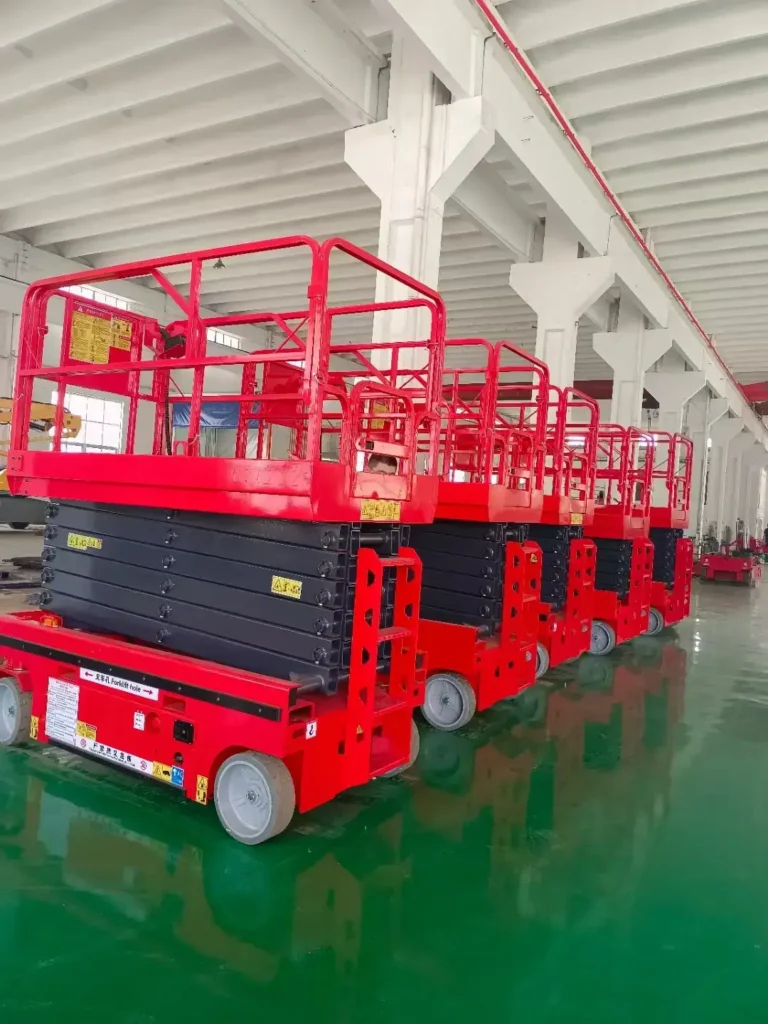
Selecting the optimal warehouse scissor lift is crucial for ensuring safe, efficient facility maintenance, high-bay inventory checks, electrical fitting, and overhead HVAC repairs. Indoor logistics centers present unique operational constraints, including narrow rack aisles, sensitive epoxy floors, and strict zero-emission standards.
Using improper aerial equipment in enclosed distribution hubs leads to aisle blockages, floor scuff marks, and unnecessary downtime. Matching lift specifications to your precise warehouse layout enhances productivity while maintaining full compliance with occupational health and safety standards.
In this guide, we break down essential parameters for choosing a high-performance warehouse scissor lift, covering dimensions, battery systems, non-marking tires, and total cost of ownership.
Table of Contents
- Why Facilities Need a Specialized Warehouse Scissor Lift
- Key Factors to Evaluate Before Purchasing
- Aisle Widths and Chassis Transport Dimensions
- Working Height and Platform Load Capacity Requirements
- Electric Power Systems and Non-Marking Tires
- Essential Safety Features for Indoor Warehouses
- Common Mistakes to Avoid in Warehouse Machinery Sourcing
- Frequently Asked Questions (FAQ)
- Conclusion and Next Steps
Why Facilities Need a Specialized Warehouse Scissor Lift
Unlike rugged outdoor construction jobsites, indoor logistics hubs require compact, clean, and highly maneuverable elevating work platforms. A dedicated warehouse scissor lift is engineered specifically to navigate tight rack corridors without disrupting daily material handling workflows.
Modern distribution centers operate high-density rack storage, requiring equipment that delivers vertical reach with minimal horizontal footprint.
- Zero Emissions: Electric AC or DC motor drives prevent toxic exhaust fumes inside enclosed spaces.
- Precision Steering: Zero inside turning radiuses allow smooth rotation within narrow aisle intersections.
- Floor Surface Protection: Non-marking solid rubber tires safeguard polished concrete and epoxy floor coatings.
Key Factors to Evaluate Before Purchasing
Evaluating jobsite conditions ensures your chosen warehouse scissor lift integrates seamlessly into daily operations without operational bottlenecks.
| Selection Criteria | Standard Requirement | Operational Impact |
|---|---|---|
| Aisle Clearance Width | 0.76 m – 1.15 m (Compact / Narrow Chassis) | Prevents rack collision and allows passage alongside pallet jacks. |
| Working Height | 6.0 m – 16.0 m (Depending on top rack height) | Reaches lighting fixtures, fire sprinklers, and upper shelf levels. |
| Drive Power Type | Electric AC Drive / Maintenance-Free Lithium | Delivers quiet operation, long battery runtime, and zero emissions. |
| Platform Capacity | 230 kg – 450 kg (500–990 lbs) | Supports two maintenance techs plus tools and replacement parts. |
| Floor Load Limits | Low Gross Vehicle Weight + Pothole Protection | Protects elevated mezzanine floors and tile surfaces from stress. |
Aisle Widths and Chassis Transport Dimensions
Before ordering a warehouse scissor lift, measure the narrowest clear passage across your facility, including doorway openings, rack corridors, and freight elevators.
Ultra-compact micro lifts feature chassis widths starting at just 0.76 m (30 inches), easily clearing standard single commercial doorways. For detailed reach comparisons across different chassis sizes, review our scissor lift working height guide.
Additionally, pay close attention to overall stowed height. Models equipped with foldable guardrails lower total height below 2.0 m, enabling smooth passage beneath overhead door headers and mezzanine beams.
Working Height and Platform Load Capacity Requirements
Calculate required working height by adding 2.0 m (the average reach of an upright worker) to the maximum platform deck elevation. For example, a 10 m working height lift provides a maximum platform floor elevation of 8.0 m.
Simultaneously, evaluate total platform payload limits to ensure safe operation. To calculate personnel, tool, and material weight limits accurately, consult our scissor lift load capacity guide.
For facility operations requiring international procurement from OEM suppliers, see our buyer’s guide on importing scissor lifts from China.
Electric Power Systems and Non-Marking Tires
Indoor industrial environments demand quiet, pollution-free drive systems. A modern warehouse scissor lift utilizes advanced electric battery technology to maximize daily uptime.
Comparing battery options is crucial for facility managers evaluating multi-shift operations:
- Lead-Acid Deep-Cycle Batteries: Cost-effective initial purchase price, requiring regular distilled water topping and an 8-hour charge cycle.
- Lithium-Ion (LiFePO4) Battery Systems: Zero daily maintenance, 2-hour fast charging, and complete support for opportunity charging during break periods.
For a detailed breakdown between battery chemistries and total operational costs, consult our scissor lift battery guide. To evaluate baseline equipment pricing across electric models, review our electric scissor lift price guide.
Furthermore, all indoor machines must feature non-marking solid rubber tires. Standard black rubber tires leave dark scuff marks on coated floors that require expensive chemical scrubbing.
Essential Safety Features for Indoor Warehouses
Operating elevated machinery in busy logistics environments requires comprehensive safety mechanisms. Compliance with international standards defined by IPAF (International Powered Access Federation) ensures operator protection on the floor.
Ensure your chosen warehouse scissor lift includes these factory-installed safety components:
- Automatic Pothole Protection: Steel guard plates automatically deploy when the platform rises, reducing ground clearance to prevent tip-over if a wheel drops into a floor drain or pit.
- Tilt and Overload Sensors: Audio-visual alarms sound instantly if the chassis exceeds safe incline angles or if platform weight limits are breached, complying with ANSI A92.20 safety regulations.
- Emergency Descent Valve: A manual hydraulic release pull-cable at the base allows ground crew to lower the platform safely during total electrical power loss.
If you are deciding between different chassis and drive configurations, refer to our comparison on self-propelled vs mobile scissor lifts. For shipping and export packing arrangements, see our guide on scissor lift container loading.
Common Mistakes to Avoid in Warehouse Machinery Sourcing
Avoid these common operational mistakes when selecting elevating platforms for logistics facilities:
- Underestimating Turning Radius: Purchasing wide-body lifts that cannot execute 90-degree turns at narrow rack aisle intersections.
- Ignoring Floor Load Capacity: Overlooking structural weight limits on upper mezzanine floors or elevated walkways.
- Selecting Black Pneumatic Tires: Using outdoor tires that leave dark rubber scuffs on cleanroom or food-grade epoxy floors.
- Failing to Account for Charger Power: Purchasing 220V single-phase chargers when facility charging stations only provide 110V outlets (or vice versa).
Frequently Asked Questions (FAQ)
Q1: What is the narrowest aisle width a warehouse scissor lift can operate in?
Ultra-compact narrow-aisle scissor lifts feature overall chassis widths starting at 0.76 m (30 inches), allowing them to navigate and elevate comfortably within rack corridors as narrow as 1.2 m to 1.5 m.
Q2: Can I use a warehouse scissor lift outdoors on uneven concrete?
Most electric warehouse scissor lifts are rated primarily for flat, slab surfaces with zero to 3-degree slopes. Operating on rough gravel or steep inclines triggers tilt alarms and automatic motion cutouts for stability safety.
Q3: Are lithium batteries better than lead-acid for warehouse scissor lifts?
Yes, lithium batteries are ideal for warehouse applications because they require zero daily water maintenance, produce zero hydrogen gas emissions during charging, and support rapid opportunity charging during shift breaks.
Q4: How do I transport a warehouse scissor lift between different floor levels?
Ensure total machine weight and stowed dimensions do not exceed the freight elevator payload rating. Alternatively, lifts feature dedicated crane lifting points and forklift pockets built directly into the lower chassis frame.
Conclusion and Next Steps
Selecting the right warehouse scissor lift enhances maintenance safety, protects sensitive floor surfaces, and optimizes overhead facility management. By carefully evaluating aisle dimensions, working height, electric battery options, and non-marking tires, facilities secure a productive and long-lasting aerial work asset.
Need expert advice on matching elevating platforms to your warehouse layout? Explore our complete collection of electric scissor lifts for sale or browse our master directory of aerial lift for sale to request custom specification sheets and direct factory quotes today.